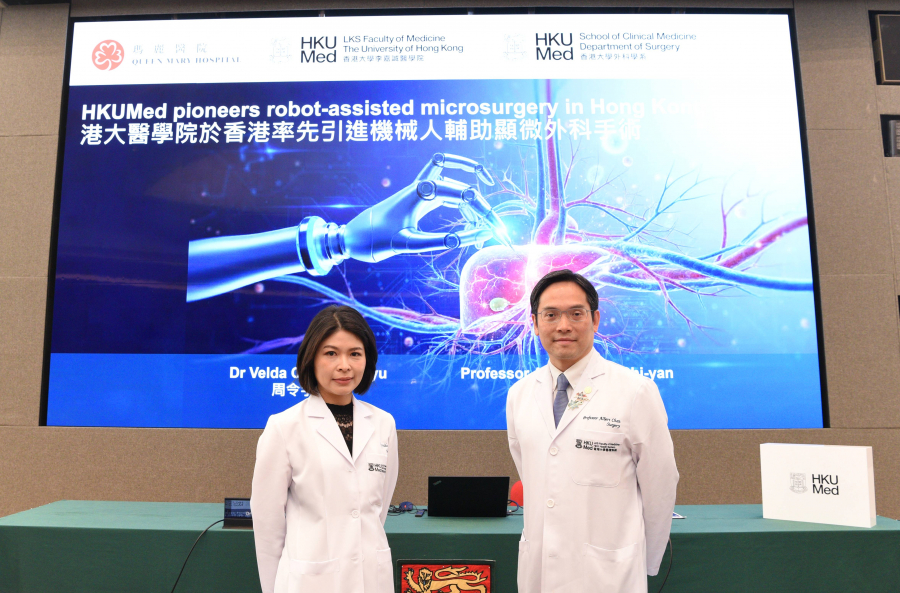
A research team from the Department of Surgery, School of Clinical Medicine, LKS Faculty of Medicine, the University of Hong Kong (HKUMed) has introduced robot-assisted microsurgery in Hong Kong for the first time. The team successfully completed 48 procedures, including the world’s first robot-assisted liver transplant surgery and trans-hairline robotic microvascular surgery. Clinical data indicate no complications related to the use of the robotic micro-surgical platform. All anastomoses were patent with no long-term complications. This breakthrough highlights the leadership of HKUMed and Queen Mary Hospital (QMH) in advancing precision surgery and setting new global benchmarks in complex surgical care.
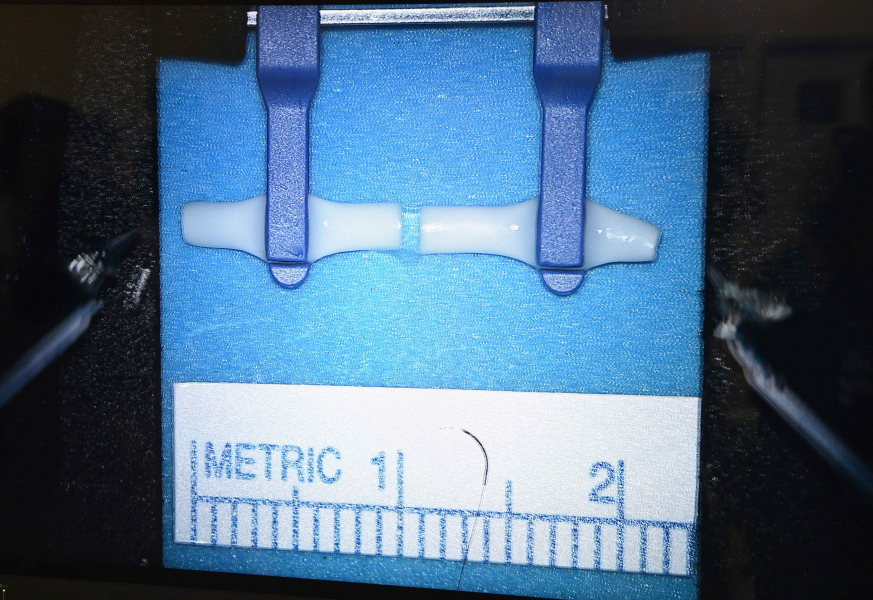
Microsurgery is one of the most technically demanding disciplines in surgery, requiring surgeons to operate under high-powered magnification on structures as fine as 0.1 mm. It is frequently used to join blood vessels, lymphatic vessels and nerves. However, tremors and ergonomic strain constrain both performance and the number of surgeons capable of performing these intricate procedures.
Extending surgical capability beyond human limits
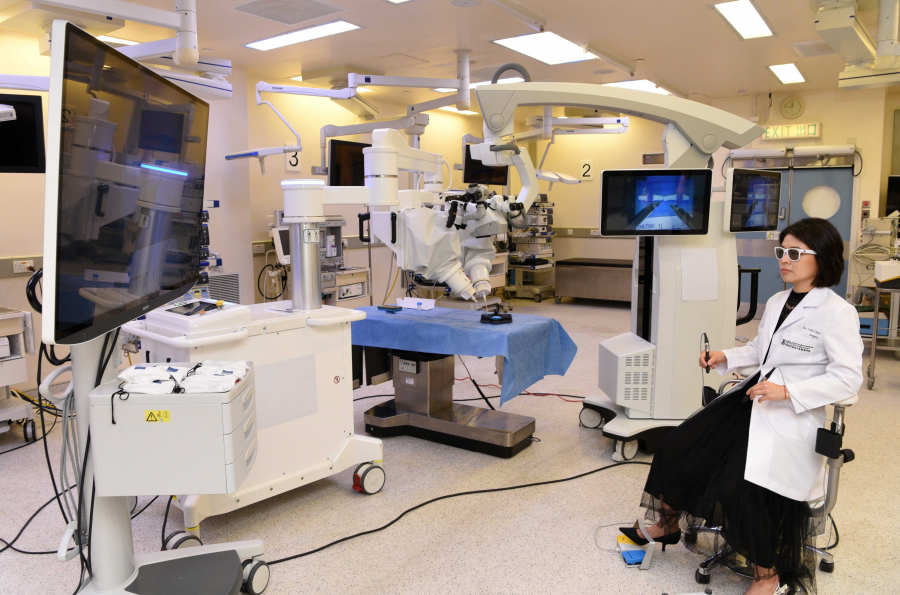
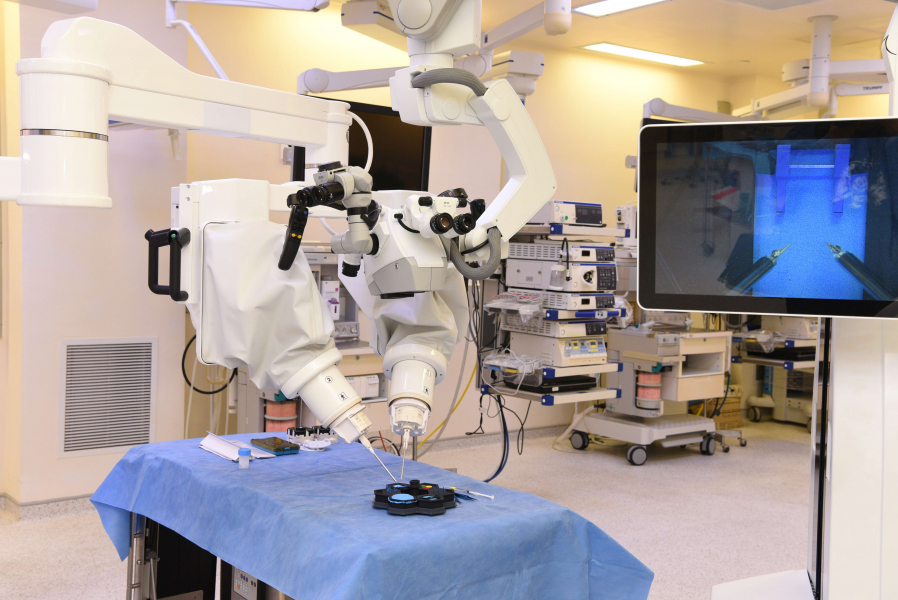
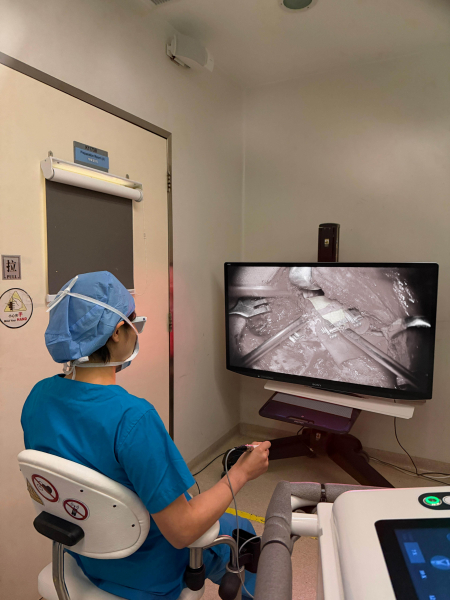
The robotic microsurgical platform addresses the limitations of conventional manual microsurgery by tremor filtration, motion scaling and enhanced visualisation. Furthermore, long dextrous robotic arms with seven-degrees of freedom connected to dedicated micro-instruments allow surgeons to operate with precision in confined spaces, which would otherwise be too restricted for instrument access, thus limiting manual dexterity. The surgeon operates from an ergonomically optimised environment, reducing fatigue and strain. These properties allow a gentler, more structured learning curve, thus accelerating the development of a larger pool of competent microsurgeons, ultimately reducing operative waiting times whilst maintaining a high standard of care.
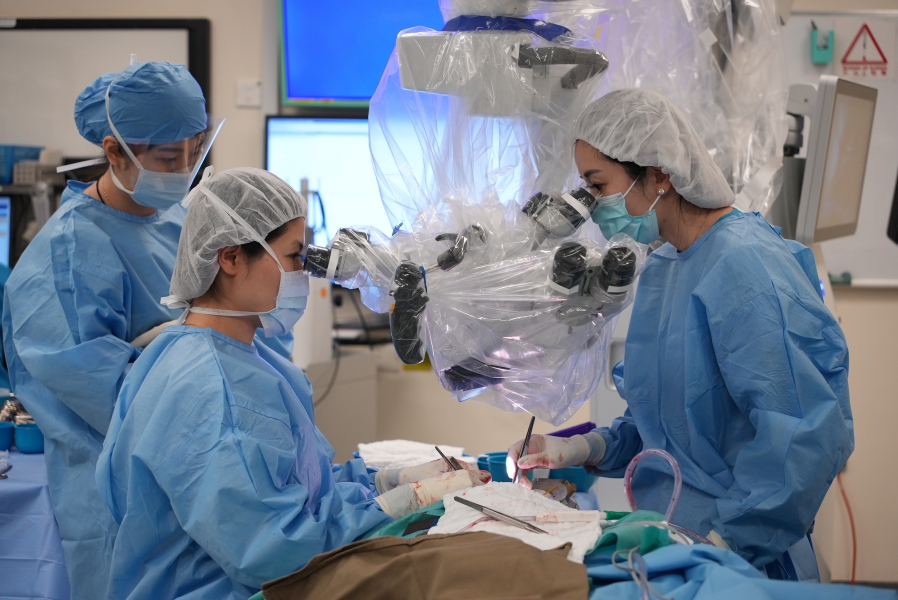
The HKUMed surgery team introduced the clinical application of robotic‑assisted microsurgery in June 2025, with 48 successful procedures completed to date. In April 2026, the surgical team achieved a global first by performing a successful robotic‑assisted microsurgical living‑donor liver transplantation. Building on earlier breakthroughs, the team set another world-first in late 2025 by applying robotic‑assisted microsurgery in managing head and neck cancer. Other applications of this technique include reconstructive procedures after tumour extirpation, lymphatic surgery and trauma surgery. No patients experienced postoperative complications, and all anastomoses remained patent.
World-first robot-assisted liver transplantation
Live-donor liver transplantation involves a short, small-calibre hepatic artery whose patency is critical for perfusion of the graft and biliary system. Microsurgeons perform hepatic artery microvascular anastomosis deep within the abdomen, compounded by cardiac pulsation and graft pressure on the surgeon’s operating hand with each breath — conditions in which only a few microsurgeons can operate independently.
Dr Velda Chow Ling-yu, Clinical Associate Professor, Department of Surgery, School of Clinical Medicine, HKUMed; and Division Chief, Divisions of Head and Neck Surgery and Plastic and Reconstructive Surgery at QMH, said, ‘By delivering greater stability, precision and control, the robotic platform enables surgeons to operate effectively even under highly demanding conditions, while also making the learning experience more intuitive and reproducible. This allows us to elevate more surgeons to a high level of competency in a shorter timeframe.’
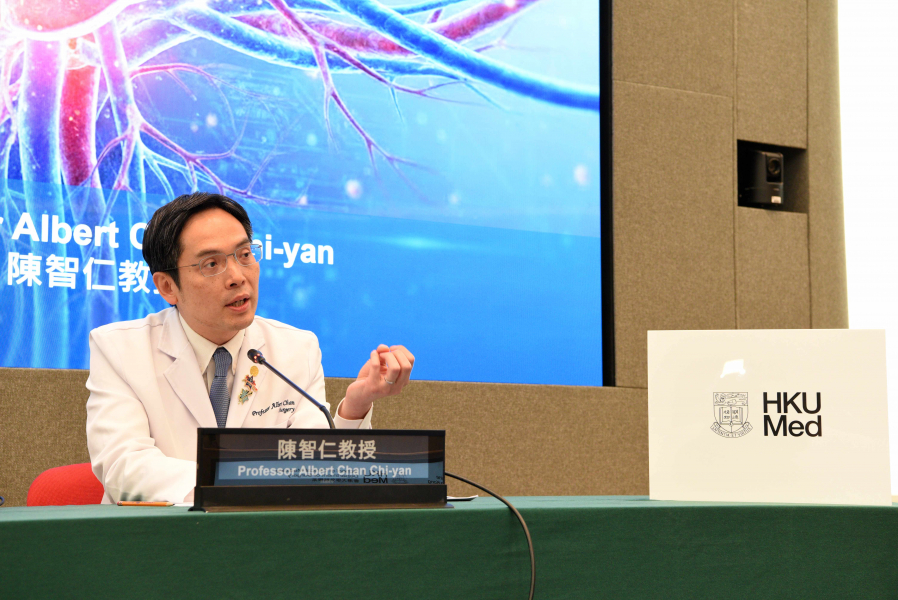
Professor Albert Chan Chi-yan, Clinical Professor, Li Shu Fan Medical Foundation Professor in Surgery, Department of Surgery, School of Clinical Medicine, HKUMed; and Director of the Liver Transplant Centre at QMH, remarked, ‘Our world-first application of robotic microsurgery in liver transplantation has set a new benchmark in the field. The enhanced stability and dexterity of the platform give our surgical team unparalleled precision under the most demanding anatomical conditions. This translates directly into the highest standard of care and improved outcomes for every patient we serve.’
Trans-hairline robotic microvascular surgery in head and neck cancer
Patients with head and neck cancer may require reconstruction after tumour extirpation to restore speech and swallowing functions. Microvascular anastomosis is frequently performed in the neck to establish blood supply to the reconstructed tissue. Traditionally, this is done via an incision on the anterior neck, which can result in conspicuous scarring. Transection of dermal lymphatics over the anterior neck results in facial and neck lymphoedema, which is not only unsightly, but also impedes speech and swallowing rehabilitation.
In repositioning the scar to within the posterior hairline, the scar is completely concealed. Facial and neck lymphoedema is minimal, which results in less disfigurement and functional impairment. However, the increased working distance and confined operative space makes manual microvascular surgery via the trans-hairline approach extremely challenging.
‘Manual microvascular anastomosis under these circumstances is difficult owing to limited exposure and confined working space deep in the neck. Therefore, it can be performed only by the most experienced microsurgeons, frequently in non-physiological positions, with adverse ergonomics and no assistants,’ explained Dr Velda Chow. ‘With the extended reach of the dextrous robotic arms, the robotic platform ensures precision and ergonomics despite the challenging environment. Together with more efficient training of a larger pool of surgeons, we hope more patients can benefit from this cutting-edge surgical procedure.’
Professor Simon Law Ying-kit, Chairperson and Chair Professor of Esophageal and Upper Gastrointestinal Surgery, Cheung Kung-Hai Professor in Gastrointestinal Surgery, Department of Surgery, School of Clinical Medicine, HKUMed; and Chief of Service, Department of Surgery at QMH, said, ‘This pioneering initiative underscores the Department’s unwavering commitment to advancing surgical innovation. By bringing robotic microsurgery to transplantation and reconstruction, we are setting a new standard for patient care and positioning HKUMed and QMH at the forefront of global surgical excellence.’
About the research team
The study was led by Dr Velda Chow Ling-yu, Clinical Associate Professor, Department of Surgery, School of Clinical Medicine, HKUMed; and Division Chief, Divisions of Head and Neck Surgery and Plastic and Reconstructive Surgery at QMH. All procedures were conducted at QMH, Hong Kong.
Media enquiries
Please contact LKS Faculty of Medicine of The University of Hong Kong by email (medmedia@hku.hk).

 Facebook
  HKU IOS App
  HKU Android App
  Social Media and Apps